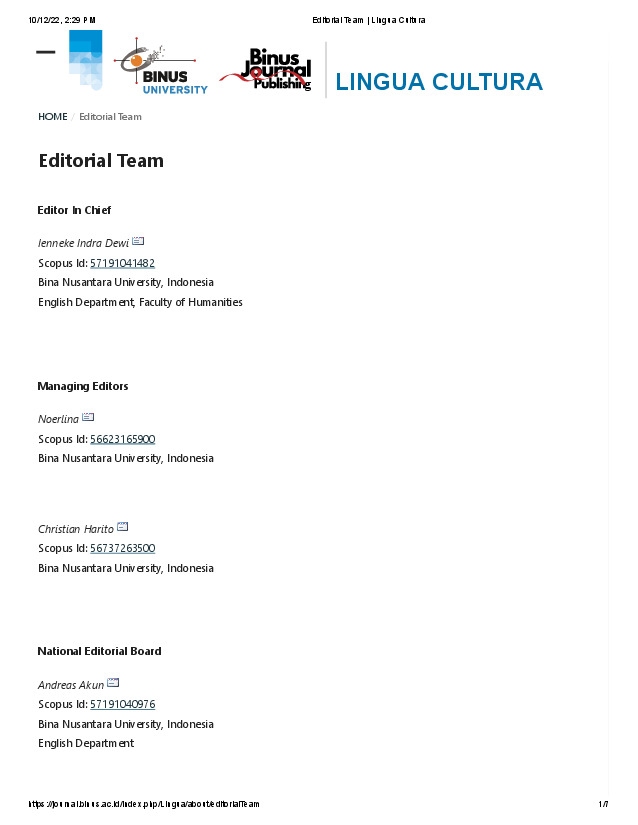
Dewan Redaksi

Sampul Jurnal
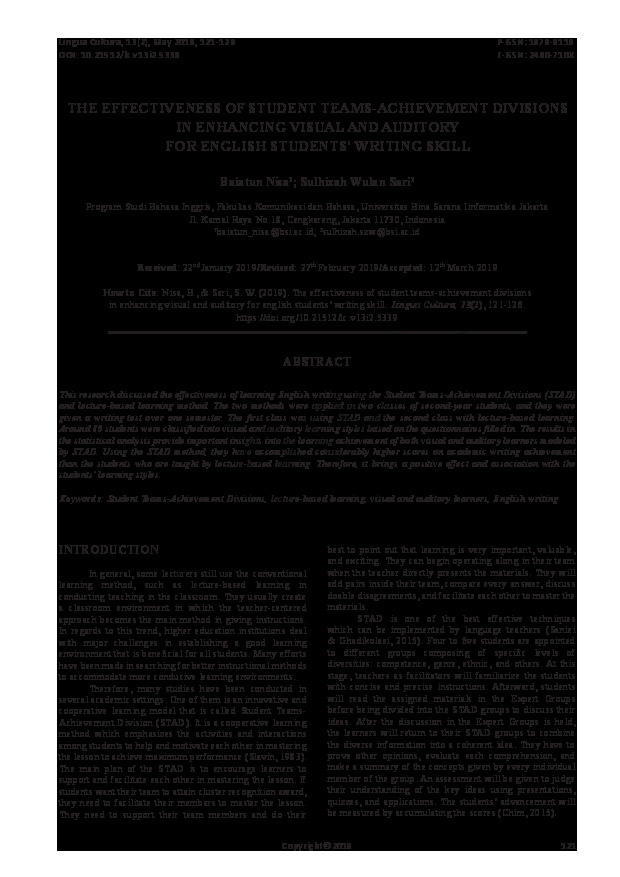
Artikel Lengkap
Similarity Check
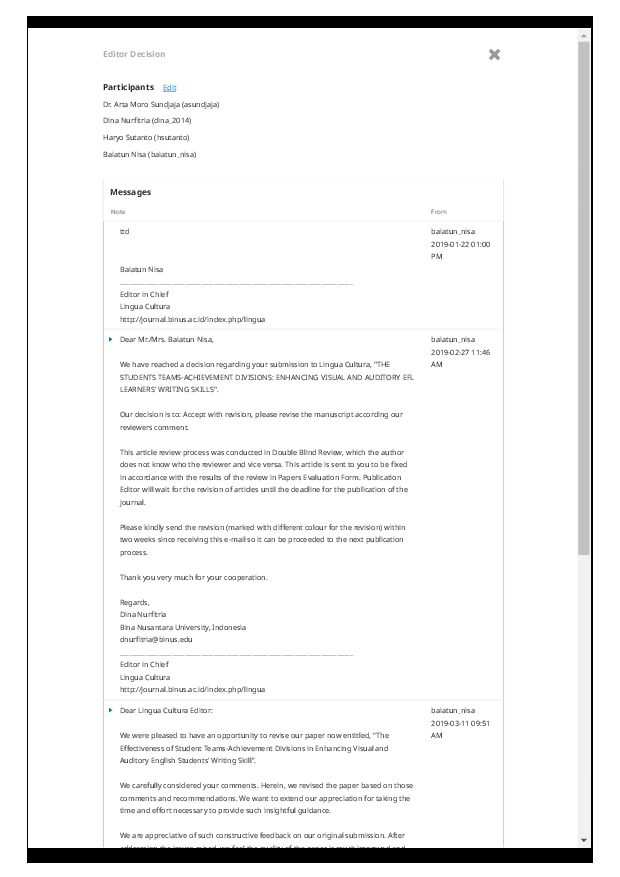
Bukti Korespondensi
Daftar Isi
Adesoji, F. A., & Ibraheem, T. L. (2009). Effects of Student Teams-Achievement Divisions strategy and Mathematics knowledge on learning outcomes in Chemical Kinetics. Journal of International Social Research, 2(6), 15–25.
Adu, E. O., & Galloway, G. (2015). The effects of cooperative learning on students’ economics achievement and attitude towards economics. Journal of Economics, 6(1), 30−36. https://doi.org/10.1080/09765239.2015.11885014.
Awla, H. A. (2014). Learning styles and their relation to teaching styles. International Journal of Language and Linguistics, 2(3), 241–245. https://doi.org/10.11648/j.ijll.20140203.23.
Chim, H. (2015). Literature review of the cooperative learning strategy – Student Team Achievement Division (STAD). International Journal of Education, 7(1), 29−43. https://doi.org/10.5296/ije.v7i1.6629.
DePorter, B., Reardon, M., & Singer-Nourie, S. (1999). Quantum teaching: Orchestrating student success. Boston: Allyn and Bacon.
Gómez-López, R., Martínez, P., & Sanchez-Ruiz, L. (2018). Cooperative learning and perception in future graduates of business administration and management. Proceedings of ICETIC 2018, 2(21), 1344-1347. https://doi.org/10.3390/proceedings2211344.
Hanafi, A., & Basuki, I. (2018). Student Team Achievement Divisions: Its effect on electrical motor installation knowledge competence. IOP Conference Series: Materials Science and Engineering, 336, 012025. https://doi.org/10.1088/1757-899X/336/1/012025.
Ghadirli, H. M., Rastgarpour, M., Hashemi, S. M., & Pedram, M. M. (2016). Effectiveness of learning style in popularity of personalized mobile intelligent tutoring system from view of learners. Indian Journal of Science and Technology, 9(31), 1−8. https://doi.org/10.17485/ijst/2016/v9i31/86246
Nikou, F. N. R., Bonyadi, A., & Ebrahimi, K. (2014). The effect of Student Team-Achievement Divisions (STAD) on language achievement of Iranian EFL students across gender. European Online Journal of Natural and Social Sciences, 3(4), 936–949.
Ocampo, R. O & Bascos-Ocampo, R. (2015). Effectiveness of Students’ Team Achievement Division on students’ attitude towards Physics. Asia Pacific Journal of Multidisciplinary Research, 3(4), 112−117.
Ojeh, N., Sobers-Grannum, N., Gaur, U., Udupa, A., & Majumder, M. A. A. (2017). Learning style preferences: A study of pre-clinical medical students in Barbados. Journal of Advances in Medical Education & Professionalism, 5(4), 185–194.
Saniei, A., & Ghadikolaei, F. N. (2015). The contribution of Student Teams-Achievement Divisions (STAD) to teaching English collocations to intermediate learners. International Journal of Language Learning and Applied Linguistics World (IJLLALW), 8(2), 125−133. Slavin, R. E. (1983). Cooperative learning. New York: Longman.
Tran, V. D. (2014). The effects of cooperative learning on the academic achievement and knowledge retention. International Journal of Higher Education, 3(2), 131−140. https://doi.org/10.5430/ijhe.v3n2p131.
Van Wyk, M. M. (2015). Measuring the effectiveness of Student Teams Achievement Divisions as a teaching strategy on Grade 10 Learners’ Economic Knowledge. International Journal of Educational Sciences, 10(2), 325−337. https://doi.org/10.1080/09751122.2015.11917664.